Office: USC GCS #405A
Email: jieyuz.nlp [at] gmail [dot] com
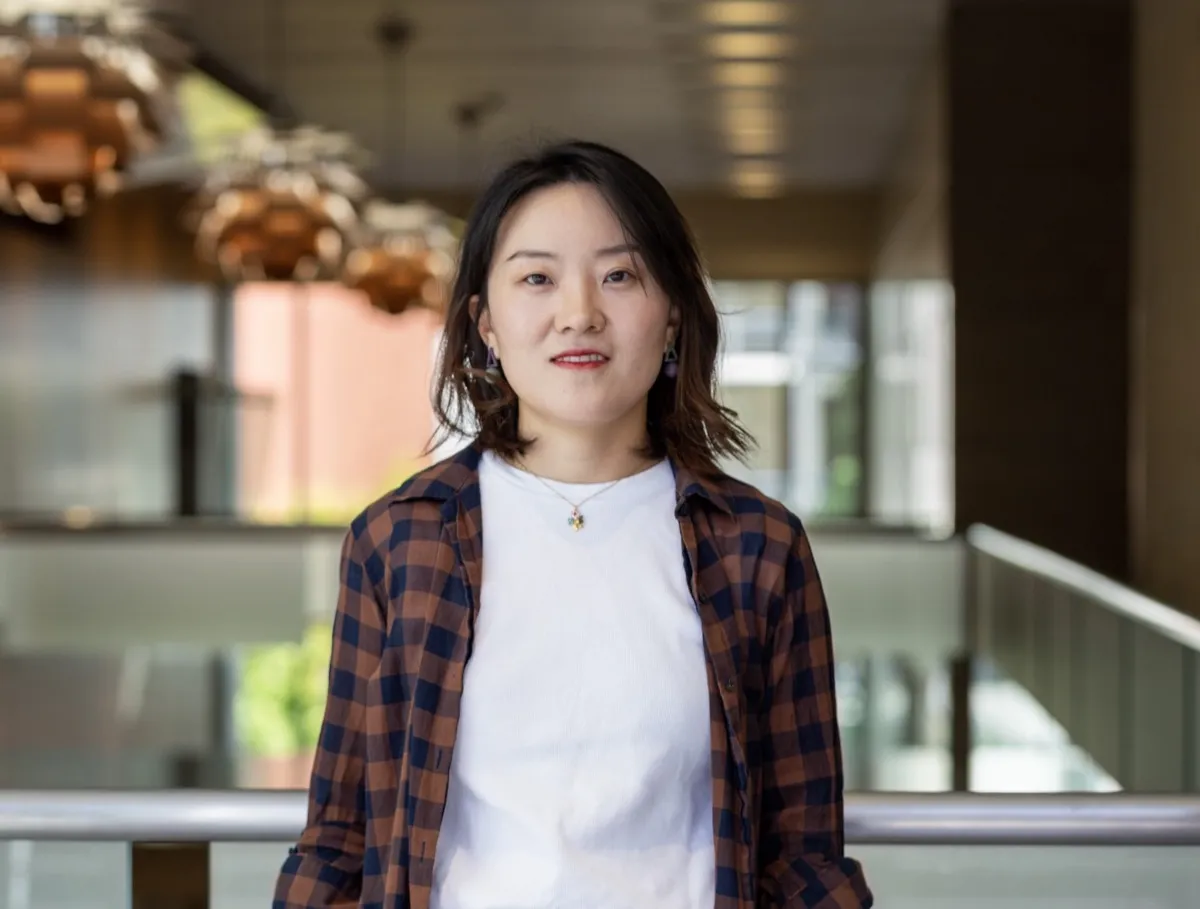
Jieyu Zhao · 赵洁玉
Gabilan Assistant Professor · Thomas Lord Department of Computer Science, USC



📢 I will be moving to HKUST in January 2027 — and I'm recruiting PhD students, postdocs, and RAs!
📕 Chinese version (中文版): see my Xiaohongshu post.
I'd love to hear from:
- PhD students (Spring / Fall 2027)
- Postdocs
- Research Assistants (RAs) — including undergraduate and master's students who'd like to get an early start on research
Timeline
PhD admissions and fellowship timelines in Hong Kong start early:
- Spring 2027: HKUST has a Spring PhD intake, and applications open in September 2026. Please refer to each program's official page for which programs are open and their application deadlines.
- Fall 2027: Applications also open in September 2026. If you plan to apply for the HKPFS (Hong Kong PhD Fellowship Scheme), note that HKUST's internal deadline is likely around November 1, 2026 — please double-check the exact date on the official page.
If you're considering starting in Spring or Fall 2027, I'd recommend reaching out and preparing now.
How to reach me
The easiest way is to fill out this form (5–10 minutes) — I review every submission and reach out if there's a good fit, so there's no need to email separately.
If you'd rather email, please use the following subject format:
[Term-Position] Name – Current Institution – Research Area
Please attach your CV and keep the email body to at most 10 sentences (5 is ideal; longer emails will be ignored), briefly covering: your research background, why your experience and research interests are a good fit for my research directions, and one specific research question you'd like to explore.
📢 Contact & Collaboration
I am open to collaboration!
- Prospective students / interns: For the 2027 HKUST positions (PhD / postdoc / RA), see the announcement above. For internships, please check out the LIME Lab first, then fill out this form.
- Other inquiries: please feel free to email me directly.
- Recommendation letter: please fill out this form and email me at least 3 weeks before the deadline.
🐾 Research Papers @ LIME Lab
My research is on current AI models and agents: how quickly they adapt, what they can really do, how they act in the world, what emerges as systems get more capable, and how we evolve alongside them.
- Adaptation. When does adaptation actually stick, and when does it slip? RFT · Alignment · In-context · Curriculum Efficient post-training (RFT, RLHF) and in-context methods that let LLMs and agents pick up new skills and domains fast. Lately I'm especially curious about the dynamics of adaptation itself: when it sticks, when it slips, and what role world models might play in making it reliable. See: AdaRFT [arXiv 25] , ERL [ICLR 26 Workshop] , WildFeedback [ACL 26] , GRAVITY [EACL 26]
- Agents. How do agents work in messy environments, and how do they help domain experts? CUA · Tool use · Reward modeling · Domain agents I work on agents on two fronts. First, the foundations: computer-use agents (CUA), VLA models, and tool-using LLMs, with a focus on what breaks and what closes the loop: action spaces, reward signals, error recovery, and deployment safety. Second, building agents that help users from other domains, especially medicine and drug discovery, where domain knowledge and trust matter as much as raw capability. See: CoAct-1 [ICLR 26] , ExeVRM [arXiv 26] , OS-Blind [arXiv 26] , MedCopilot [ACL 26 Demo] , DrugAgent [AI4Research @ AAAI 25]
- Emergence. What emerges as systems get more capable? Hallucination · Reward hacking · Data attribution · Multi-agent Emergence cuts both ways. I'm interested in side-effects of capable models (e.g., hallucinations, refusal degradation, reward hacking). And I'm drawn to the unknowns of multi-agent interaction: when agents cooperate, conflict, mediate, or negotiate, what new behaviors appear? Useful capabilities as much as risks. See: Hallucination Tax [EMNLP 25 Findings] , Unsafe Data Attribution [ICML 26] , ProMediate [ACL 26 Findings]
- Evaluation. How do we know what models can really do? Probing · Multimodal · Cultural · Trustworthiness Going beyond benchmark numbers to probe what models really know (reasoning, multimodal grounding, cultural intelligence, agent competence, trustworthiness) and where they quietly fail, including the biased and unsafe failures most likely to cause real-world harm. See: Probing VLMs [EACL 26] , CQ-Bench [arXiv 25] , SEA [COLM 25] , CulturalPersonas [EMNLP 25 Findings] , TrustGen [ICLR 26]
- Co-evolution. How does AI change humans, not just the other way? Human-AI interaction · Sociotechnical · Trust · Long-term influence Most alignment work studies how human feedback shapes AI (e.g., RLHF); I'm equally interested in the reverse: how living with capable AI reshapes human cognition, creativity, work habits, and social norms, and how to make that co-evolution visible, so it isn't something that just happens to us. More to come. This direction is in early exploration.
📰 News
- [Aug 2026] 🎉 Three papers accepted at EMNLP 2026: PALMs: Using Multi-Construct Grounded Rationales for Modeling Population Preferences in LLMs and Skill Reuse as Compression in Agentic RL at the Main Conference, plus Modeling, Evaluating, and Enhancing Reasoning of Large Language Models in Complex Social Environments in Findings. Congrats to all collaborators!
- [Aug 2026] 📑 Can LLMs Grasp Implicit Cultural Values? Benchmarking LLMs' Cultural Intelligence with CQBench is accepted to TMLR.
- [Jul 2026] 📑 FairCoder: Probing LLM Bias in High-Stakes Decision Making via Coding Tasks is accepted as a poster at SeT-LLM @ KDD 2026.
- [Jul 2026] 🎓🎉 Congrats to Taiwei for passing his PhD defense! Wish you all the best for your next journey, Dr. Shi!
- [Jul 2026] 🛫 I'm at ICML Jul 5 – 12. Looking forward to chatting with everyone!
- [Jul 2026] 🎉 We received a Microsoft AI and the New Future of Work grant! Thank you, Microsoft!
- [Jun 2026] 📑 Video-Based Reward Modeling for Computer-Use Agents is accepted to ECCV 2026.
- [Jun 2026] 📑 Efficient Reinforcement Finetuning via Adaptive Curriculum Learning is accepted to TMLR 2026.
- [May 2026] 📢 Call for submissions to the Secure and Trustworthy LLM Workshop!
- [May 2026] 🎤 Gave a talk at ServiceNow Research.
- [Apr 2026] 🎤 Gave a tea talk at Mila.
- [Apr 2026] 🎤 Gave a tea talk at Hippocratic AI.
🗞️ Older news (16 more)
- [Mar 2026] 🍋🟩 Reopened the open office hour!
- [Mar 2026] 📑 Two papers at EACL: What's Missing in Vision-Language Models? Probing Their Struggles with Causal Order Reasoning and GRAVITY: A Framework for Personalized Text Generation via Profile-Grounded Synthetic Preferences. Drop by if you're attending!
- [Mar 2026] We're so happy to welcome Jiaqi Deng to our group!
- [Mar 2026] 📑 New paper out: Video-Based Reward Modeling for Computer-Use Agents. Use it to evaluate the performance of your agents!
- [Mar 2026] 💻 The code for ERL is available here — play with it!
- [Feb 2026] 🎉 Excited to receive the OORI Research Catalyst Program Award! Hat tip to all collaborators.
- [Feb 2026] 🎓 Congrats to Ziyi for passing her PhD qualifying exam!
- [Feb 2026] 📑 New paper: Experiential Reinforcement Learning. Please upvote ⬆️ if you like it!
- [Feb 2026] 🎉 ICLR 2026 accepted: CoAct-1: Computer-using Multi-agent System with Coding Actions, Doxing via the Lens: Revealing Location-related Privacy Leakage on Multi-modal Large Reasoning Models, and On the Trustworthiness of Generative Foundation Models. Congrats to all collaborators!
- [Nov 2025] I will be at the IVADO workshop.
- [Nov 2025] 🎉 Our paper Analyzing Uncertainty of LLM-as-a-Judge won the SAC Highlight at EMNLP 2025. Congrats to all collaborators!
- [Nov 2025] I will be at EMNLP 2025. See you there!
- [Oct 2025] 🎓 Congrats to Priyanka for passing her PhD qualifying exam!
- [Oct 2025] 👩🏻💻 Gave a talk at UPenn CLunch on 'Building Personalized AI Assistants: From Task Execution to Human Alignment'.
- [Oct 2025] 🎓 Congrats to Taiwei for passing his PhD qual exam — he's a PhD candidate now!
- [Aug 2025] 🎉 We got 5 papers accepted at EMNLP 2025! Check them out here.
🎤 Recent Talks
all talks →- Talk · CPIL, McGill University · 2026-05
- Invited Talk · ServiceNow · 2026-05
- Tea Talk · Mila · 2026-04
- Invited Talk · Hippocratic AI · 2026-04
- Invited Talk · Microsoft Montreal · 2026-03
- IVADO Workshop on Cognitive Basis of Reasoning (in Minds and AI) · IVADO · 2026-01
- IVADO Agent Workshop · IVADO · 2025-11
- Building Personalized AI Assistants: From Task Execution to Human Alignment · UPenn NLP Seminar (CLunch) · 2025-10
- Guest Lecture — CSCI 697 · USC · 2025-09
- UN Women Academic Conference (AI and Gender) · United Nations Entity for Gender Equality and the Empowerment of Women · 2025-08
🏆 Awards (selected)
- Microsoft AI and the New Future of Work Grant , 2026
- OORI Research Catalyst Program Award , 2026
- SAC Highlight Paper Award , EMNLP 2025 , 2025
- 100 Brilliant Women in AI Ethics , 2025
- Capital One Research Award , 2024
- EMNLP Outstanding AC Award , 2024
- Amazon Responsible AI Funding , 2023
- USC WiSE Gabilan Assistant Professorship , 2023
- NSF CI Fellowship , 2021
- MIT EECS Rising Star , 2021
- Microsoft PhD Fellowship , 2020
- SoCalNLP Symposium Best Poster Award , 2018
- UCLA Graduate Division Fellowship , 2017
- EMNLP Best Long Paper Award , 2017
- Outstanding Graduate of Beijing City , 2016
🎓 Education & Experience
- Gabilan Assistant Professor, Thomas Lord Department of Computer Science, USC · 2023.8 – present
- Microsoft Productivity Scholar, Microsoft Research · 2025.2 – 2025.10
- NSF Computing Innovation Fellow, University of Maryland, College Park · Advised by Hal Daumé III · 2022.1 – 2023.6
- Ph.D. in Computer Science, University of California, Los Angeles · Advised by Kai-Wei Chang · 2017.9 – 2021.12
- Research Intern, Google, NYC · 2021.6 – 2021.9
- Research Intern, Allen Institute for AI (AI2), Seattle · 2020.9 – 2020.12
- Research Intern, Microsoft Research, Redmond · 2020.6 – 2020.9
- Research Intern, Microsoft Research, Redmond · 2019.6 – 2019.9
✉️ Contact
Office
USC GCS #405A
by appointment only
jieyuz.nlp [at] gmail [dot] com
Open Office Hour
Sign up · Fridays, 30 min